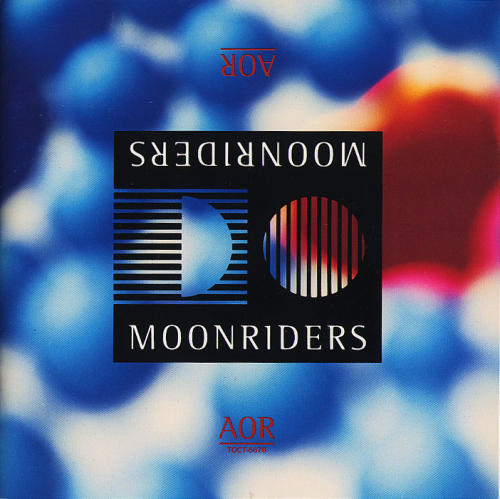
Here's an album from Chris, with some of the Moon Riders as back-up band. Not bad. The sugary 50s-worshipping pop jams are more successful than the more rock-influenced tracks. More info here:
http://diskunion.net/progre/ct/detail/IND06493
I've got a week break from grad school, so I'll hopefully be able to get a couple of posts up in the next few days. I'm still slowly fixing all the broken links in the archive. Anyway, here's a Technopop classic from Akiko Yano, Ai Ga Nakucha Ne, from 1982. Discogs provides a wealth of credits, especially when you combine the listings found here and here. These are perhaps the most detailed credits I've ever seen, and include "Nurse" and "Transportation".
Yano does it all here, with a lot of help from Sakamoto. The rest of the YMO/Yen gang show up as well, including Kenji Omura. David Sylvainsings the duet lullabye "Good Night" which closes out the album. Steve Jansen and Mick Karn from Japan also play on the album. Prolific session players David Rhodes and Shinichi Tanaka contribute as well. Kazuhiko Kato even shows up in the credits.
INFO: Akiko Yano– Ai Ga Nakucha Ne Label: Japan Records – JAL-1801 (LP), MIDI Inc. – MDCL-1252, MIDI Inc. – MDCZ-1227 (CD) Format: Vinyl and CD Country: Japan Released: 1982 (LP), 21 Sep 1993 (CD) Genre: Electronic Style: Synth-pop
TRACKLISTING: 01. Ai Ga Nakucha Ne 02. Kanashikute Yarikirenai 03. What's Got In Your Eyes 04. Oishii Seikatsu 05. Michi De Battari 06. Onnatachiyo Otokotachiyo 07. Aisuru Hito Yo 08. Sleep On My Baby 09. Another Wedding Song 10. Donnatokimo Donnatokimo Donnatokimo 11. Good Night
PERSONNEL: Akiko Yano: Production, Vocals, Arrangements, Keyboards. Ryuichi Sakamoto: Production, Arrangements, Keyboards, Vocals. David Sylvain: Vocals Haruomi Hosono: Bass Mick Karn: Bass, Vocals Steve Jansen: Drums, Vocals Yukihiro Takahashi: Drums Shinichi Tanaka: Engineering, Mixing Steve Nye: Engineering, Mixing David Rhodes: Guitar Kenji Omura: Guitar Robbie Mackintosh: Guitar Motoya Hamaguchi: Percussion Hiroki Komazawa: Steel Guitar Shigesato Itoi: Lyrics Peter Barakan: Lyrics Yuji Takahashi: Lyrics, Writing, Production Masafumi Oka: Lyrics, Writing, Production Kazuhiko Kato: Writing, Production Hachiro Sata: Lyrics
A lot of this material can be found in this previous post, but check out these slimmer releases (from the same year). These albums are pretty recent, and I've been busted for posting S's work here by Blogspot before, so I'm not writing exactly what this is here. You can buy thesefor cheap on Amazon.co.jp, and I would suggest doing so. As far as I know these were never released in North America, and go for decent cash on Amazon.com
Anyway, check these out, because they rule. Lots of perfect little Technopop jams like this one:
Happy to oblige a request from Blogspot user "theillmasta," Kenji Omura's third solo album Spring is Nearly Here 春がいっぱい from 1981. Fusion-master and YMO's touring guitarist, Omura sadly passed in 1998 of liver failure at the age of 49. Omura's earlier albums are more fusion-specific, but with this record Omura adapts more of an Technopop style, recruiting all of YMO (and associates) for an album more in-line with the Alfa Records sound.
The album's style rests somewhere between gentle fusion and Technopop, with relaxed, deliberate instrumentation and scattered, textural vocals. Tracks one and three, "Intensive Love Course" and "Seiko Is Always On Time" present fusion whimsy up front with nevertheless still, deliberate synthesizer, with Sakamoto co-producing "Seiko". The second jam, "Under Heavy Hands And Hammers", is more melancholy, with grand, stately vocals and a mild guitar solo (both from Omura). This is the first of several moments that isn't completely successful, risking maudlin over-statement.
The two covers on the album are low-points as well, Omura & co. tackling George Harrison's "Far East Man" and The Shadows' "Spring is Nearly Here" (an odd track to name the album after). To me Omura's cover of Harrison and Ron Wood's "Far East Man" is an unadventurous version of a song I already don't like. This track really communicates the worst of Omura's fusion background, actually sounding like tedious 70s soft rock. Lyrically, it's hard to say if the selection is ironic, given the "white man's burden" message hidden beneath Harrison's good intentions. I'm no Beatles scholar, so if anybody knows more about what Harrison is getting at with this track, let me know. Nice backing vocals from Akiko Yano anyway. Two tracks away is a surprise Shadows cover, morphing the 60s British pop group's proto-surf song into a half-finished sounding jam, nevertheless displaying the same level of underwater stasis as much of Spring is Nearly Here.
"Knife Life" brings the listener back to a proggy, fusion place, but is ultimately all tension and no release, plodding along to its unsatisfying fade-out. "The Prince of Shaba" is more successful, an assertive signature-Omura instrumental. This jam resolves itself nicely, with a lot of reverby, surfy "island-sounds" guitar, whimsical synth chirps and added percussion from Shinya Hayama.
Still, the highlights of the album are the two Takahashi-written tracks, "The Defector" and "Maps" (an YMO original). "Defector" is very Alfa, with Takahashi's signature driving yet pensive rhythm arrangement and decorative, trilling synths and guitar flourishes. Interesting that Peter Barakan wrote the lyrics to this song and not Mosdell. "Maps" is wild, a heavy marriage between Omura's fusion guitar and the YEN/Alfa aesthetic. These two jams have assertive vocals, Omura even doing his best David Byrne impersonation on "Maps".
While I can't give this album a ringing endorsement, there are enough solid jams here to warrant a listen, for sure. Certainly, this fills a gap in the YMO/YEN/Alfa story, and in Omura's more fusion-centric discography, as his most Technopop solo material. Enjoy!
TRACKLISTING 01. Intensive Love Course 02. Under Heavy Hands And Hammers 03. Seiko Is Always On Time 04. Far East Man (George Harrison cover) 05. Knife Life 06. 春がいっぱい (Spring Is Nearly Here) (Shadows cover) 07. The Defector 08. Inaudible 09. Maps 10. The Prince Of Shaba
CREDITS (from Discogs) Music - Kenji Omura (tracks 01, 02, 03, 05, 08, 10) - Yukihiro Takahashi (tracks 07, 09) - Ryuichi Sakamoto (track 03) Lyrics - Chris Mosdell, Peter Barakan (track 07) Backing Vocals – Akiko Yano (track 04), Yukihiro Takahashi (track 07) Bass – Haruomi Hosono Drums – Yukihiro Takahashi Guitar – Kazuhiko Kato (track 04), Kenji Omura Keyboards – Ryuichi Sakamoto, Toru Okada Percussion – Shinya Hayama (track 10) Piano – Akiko Yano Programmed By – Hideki Matsutake Vocals – Kenji Omura Track 04 lyrics and music - Ron Wood, George Harrison Track 06 music by - Brian Bennett, Bruce Welch
Two weeks ago I posted Asami Kado's La Fleur Bleue album from 1988. Here's her LP from the year previous, Anti-Fleur. Both albums are produced by Yukihiro Takahashi. One more Kado record on the way!
It's a beautiful Summer day here in Western Massachusetts. Yet, instead of mowing the lawn or weeding the garden, I'm compelled to put off such chores in order to share integral, underheard Japanese pop music with all of you. I've been saving this fantastic album, and such an idyllic Saturday afternoon as this one seems the perfect opprtunity to post Asami Kado's 1988 full-length, La Fleur Bleue.
I don't have a lot of information about this one. While this is a late-80s EMI release, there are heavy YEN vibes throughout, especially in the later half of the album. Somewhere between Technopop and the more melancholy side of Idol, La Fleur Bleue is unique in that it also indulges in the island-sounds "fusion" obsession of the time, but in a totally creative way. With light Dub movements throughout, the album is marked by ghostly reverb-drenched vocals and patient, deliberate instrumentation. I would compare it to Saeko Suzuki's best work or Dip in the Pool.
Track seven, "退屈と二つの月", is a cover of Tamao Koike'sYMO-assisted "Automne Dans Un Miroir". Yukihiro Takahashi produced this album as well as Kado's 1987 album for EMI, Anti-Fleur. Tracks like "Oriental Flash" and "フォマルハウトー南の魚" particularly sound like Takahashi creations. Can anyone confirm any further personnel for this album? Kado's Japanese Wiki page lists frequent collaborators (including Kenji Omura), but doesn't specify who produced or played on what. Speaking of Koike, I've got an album of hers to share soon as well. Until then, enjoy!
門あさ美/Asami Kado Le Fleur Bleue (1988) (JP) EMI Japan
Since discovering the Pearl Brothers' distinctive music videos, I've been trying to locate some of their music to share. I've finally found a copy (via eBay) of their 1988 album, Blue Kingdom. For some background on the group, visit my previous post on Pearl Brothers, the JP Wiki, or the official site.
Track 09, "Jiageya Stomp (Instrumental)", features none other than Ryuichi Sakamoto, whose reach and influence can never be overstated. There seems to be a reason to mention him in practically every article I post about Japanese music. Sakamoto is credited with "synthesizers" for this track. The core trio is present on this album, with Bakabon Suzuki credited as "Vagabonde". Drummer Toshiya Matsunaga has worked with a long list of Japanese groups, from Technopop to Idol. Aside from Sakamoto and Matsunaga, there's a long list of contributors and engineers. The full liner notes are included below, and with the CD-rip as well.
Here are a couple of miscellaneous Suzuki tracks for you all to enjoy. A commercial jingle, the Happy End single, and a couple contributions to a comp called Lover's Hawaii.
Here is the last of Saeko Suzuki's studio albums (that I know of), 1987's Studio Romantic. This album has three of Suzuki's best known songs, the brilliant "Happy End," which had been released as a single the year before, a re-worked version of "I Wish It Could Be Christmas Everyday in the UK" and "Happy Families", an XTC cover (a big improvment, imo). There's also a version of Thunderclap Newman's "Something in the Air". The album seems mostly made up of covers, singles and remixes; the title of the album even stresses the process of recording, as opposed to composition. That isn't to say that there aren't original jams on the album, or to slight the creative integrity of the cover versions contained in Studio Romantic.
I don't have much info on the players. Peter Gabriel-associate David Rhodes played guitar on "Blow Up", according to this website.
"Happy End" doesn't appear to be a cover of YMO's track of the same name. But to confuse the matter, here is a two-part television presentation titled "Happy End" featuring an interview with Hosono followed by a performance from Suzuki and then from Takahashi. A bizarre sequence at the beginning features a cybernetic cow and a title card which reads "Friends of Earth". If any of our Japanese readers can shed some light on this video, please share in the comments section.
I'll be posting some of Suzuki's soundtrack work as well as a few singles and miscellaneous tracks in the coming days.
Here's the video for "Happy End" from Music Tomato Japan. Nice to hear from our old friend Michael again:
Discogs: Label: Midi Inc. Catalog#: MDCZ-1030 Format: CD, Album, Reissue Country: Japan Released: 1987
Tracklist: 01. Blow Up 02. You're My Special 03. Something In The Air 04. Happy Families (XTC Cover) 05. I Wish It Could Be Christmas Everyday In The UK 06. TV Dinner 07. Happy End 08. Freak In 09. Studio Romantic 10. Dear Walt 11. Adventure In South Pacific
Next up in Saeko Suzuki's third studio album, The Law of the Green/ 緑の法則 from 1985. The album is a bit of a mix, reflective of Suzuki's soundtrack composition work and her more outright Technopop jams(tho more "pop" than "Techno" by this time). Quite a few nice, whimsical instrumental tracks, tho I personally prefer the vocal jams, like "Exile", "Come Wonder With Me" and "Good Morning", which are all excellent. Next up is 1987's Studio Romantic.
Here is Saeko Suzuki's second studio album, Visinda og Leyndardomur (科学と神秘), from 1984.
Label: BMG Victor Inc. Catalog#: BVCR-5020 Format: CD, Album Country: Japan Released: 1991
Discogs has a very detailed breakdown of the album's players. As usual. Saeko handles percussion, keys and vocals. Keiichi Suzuki, famed leader of the Moonriders and composer for the brilliant Earthbound/Mother series of video games, is credited as a player and producer on the album. According the Wiki Japan, he was Suzuki's husband at the time. Hajime Tachibana jams guitar on "Hacker ARUIWA 2 Ear Drums". For a full list of personnel, check this.
TRACKLISTING: 1. Island 2. Gin No Angel (銀のエンゼル) 3. Kagi To Stamp (鍵とスタンプ) 4. Hacker ARUIWA 2 Ear Drums 5. Mahow No Kuni (魔法の国) 6. Chi O Suu Camera (血を吸うカメラ) 7. Nightmare 8. Okashinaokashina Ferryboat (おかしなおかしなフェリーボート) 9. Tengoku Eno Rasenkaidan (天国への螺旋階段) 10. Lovery Planet (恋する惑星)
Here is the second in a near-comprehensive series of Saeko Suzuki ups. The series begins proper with her first full-length album, I Wish It Could Be Christmas Everyday, released on LP in 1983. This is a CD-rip of the 1991 remaster. Biographical info on Suzuki is hard to come by online, but I'll be adding as much information as I can with these posts.
DISCOGS:
Label: BMG Victor Inc.
Catalog#: BVCR-5019
Format: CD, Album
Country: Japan
Released: 21 Aug 1991 (CD)
TRACKLISTING:
1. 夜のウイウイ 2:58
2. I Wish It Could Be Christmas Everyday 3:07
3. 蒸気のたつ町 3:49
4. ガールスカウト 3:22
5. 夏の豆博士 2:44
6. バオバブ人 3:25
7. ジェラルミンの飛行船 3:52
8. アメリカのElectricity Co. 3:50
9. フィラデルフィア 3:47
10. 朝のマリンバ 2:40
Ryuichi Sakamoto - CM/TV Label: Warner Music (Japan) Catalog#: WPC6-10244 Format: CD Country: Japan Released: 2002
This is a compilation CD collecting various commercial and television themes and interstitials composed by Sakamoto, pieces spanning the late 70s, 80s, 90s and early 2000s. I'm particularly into the catchy theme song from NHK's You! program, which I'd like to dedicate a post to some day (check the Katsuhiro Otomo animated intro). I apologize for the large file size, but hey, there are 50 tracks.
UPDATE: It seems that the OP link is dead. I've re-uploaded the album HERE.
Is there other life in space? Do neighbor planets have Indigenous creatures? Can humans live permanently in colonies in space? Do Extraterrestrials visit Earth? Can humans travel to the Stars?
I had been planning to post the 1984 "soundtrack" album Apogee & Perigee; Chojiku Korodasutan Ryokoki, for quite some time. No need now, as I've just noticed that Ongaku Poland has recently upped it (Although I was already a follower of OP, I found the link initially via The Common Chant).
Discogs sez: "Apogee & Perigee are robots, this is a concept album or soundtrack to a musical that was never produced that tells their story. The album credits Apogee & Perigee as performers, but the lyric sheet includes some writing credits, and in addition the 2006 CD re-issue provides more information."
Testpattern seem to be the major creative force, but Discogs lists several YEN all-stars as contributors: Miharu Koshi, Koji Ueno, Miyuki Hashimoto, Hosono, and the one and only Jun Togawa, who can be heard singing in a duet with Yūji Miyake on the bittersweet "月世界旅行 (Gessekai Ryokō)" above.
All the available information is collected here, at Fanboy.com. I'd like to learn more about the two robots and the actual project, and what plans Yen and Testpattern had for its future. My Japanese trading buddies seem to not remember the album having much of an impact during its initial release. This is a real shame, as the music throughout is fantastic, an accessible yet complex emotional blend of optimism and melancholy, Greek tragedy played out as space-faring AI romance. The project is heavy with the kind of empathic projection that is often directed at non-living but "life-like" machines. A francise could have easily been created. See also the Sakamoto-scored film Where the Toys Come From for another example.
This really is an excellent, underheard album. That there seems to be an international swell of blogs posting this material is really exciting to me, and a good incentive to me to upload more and post more.
01. Testpattern, Masao Hiruma - Prologue (Hope) 02. Jun Togawa, Haruomi Hosono, Takashi Matsumoto - Gessekai Ryokou 03. Koji Ueno - Professor Persec 04. Miharu Koshi - Animaloid MV II: Tragic Comedie 05. Miharu Koshi - Sakasakenjin Egas 06. Jun Togawa - Theme Of Apogee 07. Miyuki Hashimoto - Queen Glacier 08. Jun Togawa - Theme Of Perigee 09. Jun Togawa, Haruomi Hosono, Takashi Matsumoto - Shinkuu Kiss 10. Testpattern - Hope
Nearly ecstatic to discover this "homage" to the Sakamoto/Sylvain classic by Sandy Marton, belter of the undeniable "People from Ibiza" track. Not every day do I find such a link between two of my particular cultural obsessions. Check out both songs, and hear one of the most emotionally wrenching songs--built from Sakamoto's score for the brutally heart-rending Merry Christmas Mr. Lawrence--morphed into a goofball utopian Italo-jam, complete with typically incomprehensible, mildly offensive lyrics.
The "Forbidden Colours" melody is basically used as an intro and bridge in the Marton version, but its influence is definitely felt throughout... Sandy was definitely feeling the vibe!
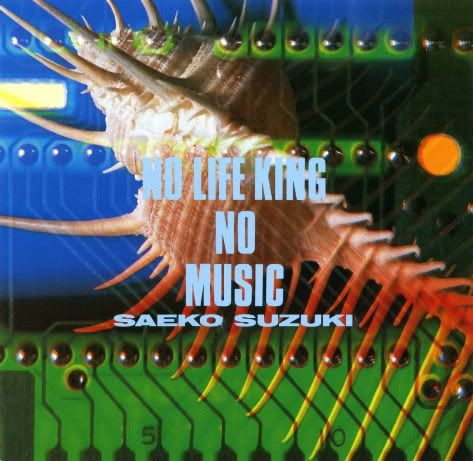
And here's the soundtrack, by Saeko Suzuki. Will have more of her work (with info) in the coming days and weeks.
Tracklist:
01. Life King 2:42
02. S-8 To T-8 2:55
03. A Ripple 1:45
04. Fat's 0:58
05. Life King - Vision 1 2:15
06. OtokoEOnnaESeiEShiEMugendai 4:30
07. T-8 To S-8 2:58
08. Feel Or Deal 3:27
09. Mother 2:32
10. Hello 2:39
11. Forbidden Mode 4:33
12. Party Attack 2:48
13. A Stone Of Wiseman 3:53
14. Reset 2:28
15. Real 10:35
Label: Midi Inc.
Catalog#: 28MD-1008
Format: CD, Album
Director: Jun Ichikawa
Writers: Seikô Itô (novel), Hiroaki Jinno
Stars: Ryo Takayama, Neko Saito and Nobuo Nakamura
REVIEW SUMMARY FROM ALL MOVIE GUIDE:
"In this movie, several "urban legends" evolve before the viewer's eyes. As the film opens, a group of boys have waited in line for hours to acquire the latest version of a video game. When a rumor goes around school that the game, "The Legend of Life King IV," is cursed, and that those who fail to finish it will die, the boys take it seriously. When their school principal dies while delivering a diatribe against video games, this confirms the curse in their eyes. Meanwhile, one of the boys' mothers comes to believe that cakes purchased at a certain bakery are poisoned in some fashion because the site of the bakery was formerly a graveyard. ~ Clarke Fountain, All Movie Guide"
Here is a VERY rare film from the late Jun Ichikawa (Tony Takitani etc.), a sort of Sci-Fi/ family drama hybrid based on Seikô Itô's novel of the same name. Since I can't speak Japanese, I found this one difficult to follow, honestly, but it definitely has the quiet intensity of an Kiyoshi Kurosawa film in places.
This is not my rip of the film, and the quality overall is VERY POOR. However, This is, as far as I know, the only way to see the film. If anybody has some English subs or can contribute some, please let me know. This film was likely never released in the US, but festival prints were clearly made if there is a New York Times review. I recommend reading the review, as it really sheds light on the story and ideas present therein. I don't think this film has ever been released on DVD in any country.
I originally came across this film while researching its composer, Saeko Suzuki. The computer game-inspired score is excellent and I managed to find a quality rip of the CD soundtrack which I will upload separately soon. I also have the majority of Suzuki's solo discography, so I'll slowly be uploading that as well.
Here is another album which I've unearthed that illustrates YMO's seemingly ubiquitous clutch on the 1980s Japanese "Technopop" (and assorted non-mainstream) landscape. Ryuichi Sakamoto produced only a few tracks on this album (I think), but Sakamoto's work actually stands in opposition to much of the album. Unlike some of the other Yen-associated female singers of the era, Koharu Kisaragi is clearly the mind behind the project, and Tokai no Seikatsu is an singular musical experience for it. Sakamoto's "Neo-Plant" production feels primarily like functional studio experimentation. This makes sense in the context of the original 12" single, but in the context of this album it's a bit jarring, even despite it's three-part framing of the album, and the admittedly appealing music itself.
While "Neo-Plant" is moderately known, this full-length album (her only?) seems obscure, and is absent from her Discogs page. The two parts of "Neo-Plant" and "Plant Posi" feature funky, mildly-dated hip hop-influenced production from Sakamoto, the sound of experimentation as I have posited. The rest of the album is a real mixed-bag, style-wise, but a quality bag for sure. No word on production or players for the other songs on Tokai no Seikatsu, but since Discogs credits Kisaragi with production on most of the 12" single, I assume she wrote the majority of these songs as well.
In contrast to Sakamoto's contributions and the wild + funky, cut & paste maximalism of much of Tokai no Seikatsu, my personal favorite track is "Traumerei", an haunted and restrained fugue, with subtle male backing vocals and piano, bassoon and click-track instrumentation. I assume Kisaragi provided the arrangement, I'd love to find out for sure.
If anybody has a rip of the single, let me know. I'd like to hear b-side "Tail", which is absent, despite Neo Plant's inclusion of "Traumerei", the other track on Neo-Plant's second side.
According to Artcontext, Kisaragi "died a few years ago". Like so much of the information in this post and in this blog, I can't substantiate that claim. If any Japanese readers have more information on Koharu Kisaragi, please comment or message me directly. Anyway, enjoy this eclectic and rewarding album.
Stay tuned, I've got A LOT of music to post in the coming weeks. (I apologize for the extravagant file size)